

Publish Date: May 1, 2025
Author: Seubert
Tags: Blog - SeubertU
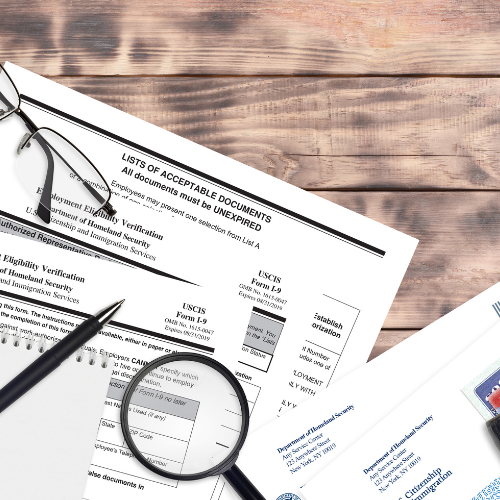
The U.S. Citizenship and Immigration Services (USCIS) recently updated its Employment Eligibility Verification form (Form I-9) and the Department of Homeland Security (DHS) Privacy Notice in the form’s instructions to align with statutory language. The revised Form I-9 is dated “01/20/25” and has an expiration date of “05/31/2027.”
Key Updates
Key updates to the Form I-9 include:
- Renaming the fourth checkbox in Section 1 to “An alien authorized to work”
- Changing “gender” to “sex” in the description of two List B documents in the Lists of Acceptable Documents
- Adding statutory language and a revised DHS Privacy Notice to the instructions
Starting April 3, 2025, the Citizenship Status selection during case creation in E-Verify and E-Verify+ will change from “A noncitizen authorized to work” to “An alien authorized to work.” However, employers should note that if an employee attests on Form I-9 as “A noncitizen authorized to work,” the employer must select “An alien authorized to work” in E-Verify. E-Verify cases will display “An alien authorized to work,” while employees and employers may continue to see “A noncitizen authorized to work” on Form I-9, depending on the form edition being used.
Employer Takeaway
The updated Form I-9 is currently available for employers to use. Additionally, employers may continue to use prior editions of the form until their respective expiration dates, as follows:
- Form I-9 (08/01/23 edition) is valid until May 31, 2027.
- Form I-9 (08/01/23 edition) is valid until July 31, 2026 (employers using this form must update their electronic systems with the May 31, 2027, expiration date by July 31, 2026).
Employers should ensure that the updated Form I-9 is incorporated into their employment verification process by July 31, 2026. Employers can find more information and additional resources by visiting the USCIS’ I-9 Central.
Contact us to see how you could minimize risk:
Recent News
2026 Construction Insurance Outlook: 5 Trends for Contractors
The 2026 construction insurance outlook: casualty pressure, fleet risk and rising litigation. See what contractors need to do to control insurance costs.
What Security Debt Means For Your Organization’s Cyber Risk
While some organizations use the term “vulnerability debt” to describe an accumulation of technical vulnerabilities, security debt is much broader, encompassing the decisions, deferrals and gaps across an organization’s people, processes and technology that weaken its security posture.
Welcome Steve Harris, VP of Producer Development
Seubert is pleased to welcome Steve Harris as Vice President, Producer Development in our Pittsburgh office. Steve leads producer recruiting, hiring, onboarding, and sales development across Employee Benefits and Commercial Lines.
The Importance of Fall Rescue Plans
Falls cause more than one-third of construction deaths, and even a worker caught by a fall arrest system can face serious injury if rescue is delayed. A fall rescue plan gives your crew clear, jobsite-specific steps to retrieve a fallen worker quickly and safely. Learn why these plans matter and what to include in yours.
Employee Spotlight: Alexandra Kearney
Seubert welcomes Alexandra Kearney as a Strategic Risk Advisor in our Pittsburgh Surety Bonding Department, helping clients manage risk and grow.
Transportation DOT Roundtable Recap: Compliance and Nuclear Verdicts | Seubert
A former DOT officer and a transportation litigator walked motor carriers through what’s changing at FMCSA and why nuclear verdicts should be on every fleet’s radar. Here’s a look at what they covered.