

Publish Date: June 9, 2025
Author: Seubert
Tags: Blog - SeubertU
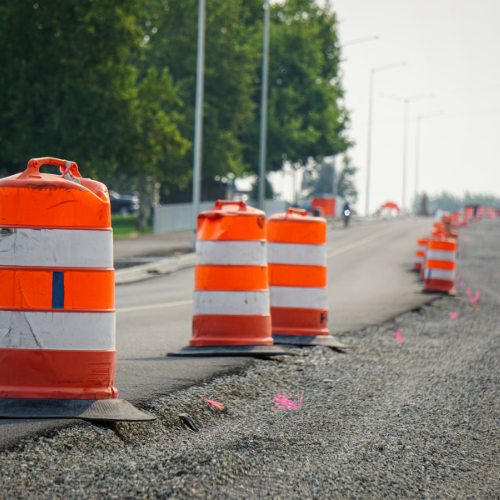
Work zones are stretches of highway where construction, maintenance and utility tasks take place. These areas can pose several safety hazards for workers, motorists and pedestrians. With these risks, it’s imperative for construction employers to implement proper safety precautions in such areas, protecting both their employees and the public.
Common Work Zone Hazards
Work zones carry multiple safety hazards, largely due to construction employees working near busy roadways, vehicles entering and exiting construction areas, flaggers redirecting traffic and lanes shifting unexpectedly. These conditions can distract unsuspecting pedestrians and motorists and hinder construction workers’ visibility, leading to crashes and other incidents. Work zone hazards include the following:
- Caught-in and -between incidents, where an individual becomes squeezed, pinched or compressed between multiple objects or parts of an object (e.g., heavy operating equipment or machinery on the roadway).
- Struck-by incidents, in which an individual gets hit by a moving object or piece of equipment. Examples of such incidents in work zones include vehicle collisions or pedestrians being struck by a vehicle.
Several factors contribute to these hazards, including a surge in roadway construction, high speed limits, traffic congestion and impatient motorists. In addition to the tragic loss of life and severe injuries that these incidents can cause, employers could encounter costly workers’ compensation claims, diminished staff morale and productivity, large-scale lawsuits, lasting reputational damage and compounded insurance expenses.
Mitigation Strategies
Construction employers can implement several safety precautions to minimize work zone hazards and help prevent potentially devastating incidents. Here are some best practices to consider:
- Establish a safety program that outlines safe operating procedures for machinery and equipment (e.g., wearing seatbelts, using parking brakes, conducting pre- and post-shift inspections, never using defective or damaged equipment), discusses on-site safety best practices (e.g., making visual contact and communicating with nearby workers before moving equipment), highlights personal protective equipment (PPE) requirements (e.g., high-visibility PPE), and encourages open communication between employees and supervisors to discuss ongoing occupational hazards.
- Adopt a traffic control plan (TCP) to limit traffic disruptions caused by a work zone and keep the area as safe as possible for all parties. The plan should create clear walking paths for employees and pedestrians and outline steps to help equipment operators and motorists travel smoothly through a work zone. While exact details in a TCP will vary, it should list temporary traffic controls for each of the four sections (i.e., the advance warning area, the transition area, the activity area and the termination area) surrounding a work zone.
- Invest in technology solutions to help reduce work zone hazards. For example, automated flagger devices, robotic gate arms and caution lights can improve safety. Furthermore, drones and telematics software can enhance work zone safety by collecting real-time pictures, video footage and data to identify potential issues before they escalate and cause major incidents.
- Educate employees on common work zone hazards and how to minimize them. This training should provide an in-depth overview of all work zone protocols outlined in the safety program and the TCP and explain how to report any unaddressed hazards. Employees should get a refresher on this training every time they begin working on a new road construction project. Such training should be supplemented by daily on-site safety talks highlighting examples of near-miss and actual incidents in work zones.
Work zones can present substantial safety hazards. By better understanding them and upholding effective mitigation strategies, employers can mitigate risks and help ensure safe and successful road construction projects.
Contact us to see how you could minimize risk:
Recent News
How AI Is Reshaping the Labor Market
Hiring patterns are changing, entry-level pipelines are thinning and the types of roles employers are actively seeking are moving.
Compliance Update: Allegheny County Advances Revised Paid Parental Leave Proposal
Allegheny County’s revised proposal would require up to 12 weeks of paid parental leave
Seubert Webinar Recap: Pharmacy Benefits Beyond the Rebate
Missed our pharmacy benefits webinar? Get the key takeaways on rebates, biosimilars, GLP-1 coverage, specialty drugs and PBM transparency, plus the recording.
Employee Spotlight: Gianna Mancino
Please join us in welcoming Gianna Mancino to the Seubert Team!
Zero-day Vulnerabilities Explained
A zero-day vulnerability may go undetected or otherwise unresolved for an extended period, quietly existing within an organization’s broader IT infrastructure without affecting typical operations.
Employee Spotlight: Dylan Ward
Please help us welcome Dylan Ward to the Seubert Team as a Surety Operations Specialist in our Surety Bond Division!