

Publish Date: July 8, 2025
Author: Seubert
Tags: Blog - SeubertU
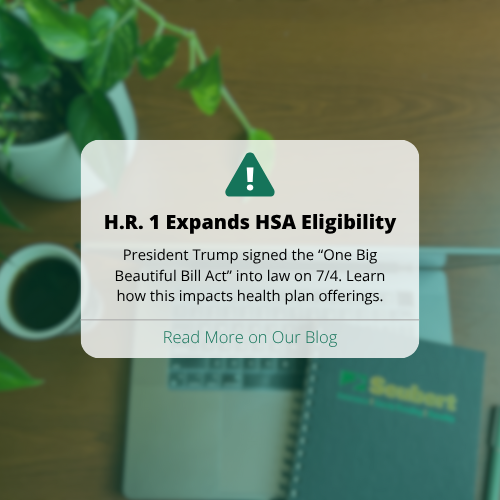
Signed into law by President Trump on July 4th, H.R. 1 (commonly referred to as the “One Big Beautiful Bill Act” or the OBBB Act) introduces several updates aimed at expanding access and flexibility for Health Savings Accounts (HSAs). The law includes changes affecting who can contribute to an HSA, as well as new ways HSA funds can be used to support healthcare needs.
Breakdown of the HSA Provisions of H.R. 1
- Effective December 31, 2025, the law expands HSA eligibility for individuals who purchase an individual bronze or catastrophic health insurance plan through an Affordable Care Act Exchange.
- Effective December 31, 2025, individuals with an HSA may deduct direct primary care fees from their HSA as a qualified medical expense. The maximum monthly amount that can be deducted is $150 for individual coverage and $300 for an individual plus dependent(s).
- With a retroactive effective date of December 31, 2024, the law includes a provision allowing telehealth services to be covered on a pre-deductible basis for individuals enrolled in a high-deductible health plan with an HSA.
Contact us to see how you could minimize risk:
- Compliance|
- Employee Benefits|
- Resources|
Recent News
Employee Spotlight: Gianna Mancino
Please join us in welcoming Gianna Mancino to the Seubert Team!
Zero-day Vulnerabilities Explained
A zero-day vulnerability may go undetected or otherwise unresolved for an extended period, quietly existing within an organization’s broader IT infrastructure without affecting typical operations.
Employee Spotlight: Dylan Ward
Please help us welcome Dylan Ward to the Seubert Team as a Surety Operations Specialist in our Surety Bond Division!
Managing Project Delays and Stoppages
Proactive planning can help employers limit financial losses and keep a project protected from start to finish.
Seubert Named #2 Best Place to Work in 2026
For the second year in a row, Seubert ranks #2 on the Pittsburgh Business Times’ Best Places to Work list in the XL Employer category.
Employee Spotlight: Valerie Vernik
Please join us in welcoming Valerie Vernik to our Employee Benefits Department as a Benefits Account Manager in our Pittsburgh Office!