

Publish Date: April 23, 2026
Author: Seubert
Tags: Blog - SeubertU
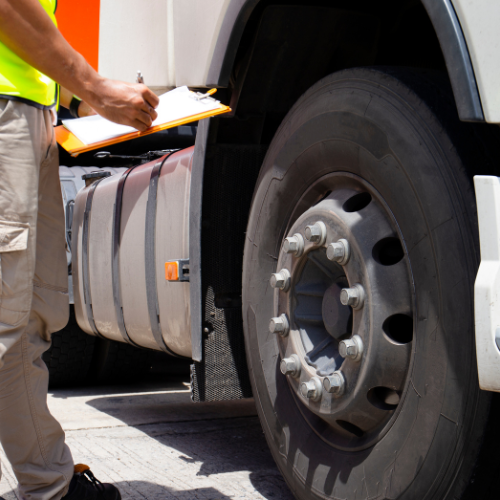
The Commercial Vehicle Safety Alliance (CVSA) will conduct its annual International Roadcheck from May 12-14, 2026, increasing roadside inspections across the United States, Canada, and Mexico to identify unsafe drivers, vehicles, and operating practices.
Roadside Inspections
During the International Roadcheck, CVSA-certified inspectors conduct roadside inspections at weigh stations, inspection sites, and through mobile patrols. These inspections follow the North American Standard program, which includes the following inspection levels:
- Level I inspections are the most comprehensive and common, using a 37-step process to evaluate both the vehicle’s mechanical condition and the driver’s operating requirements.
- Level II inspections review items that can be checked without going underneath the vehicle.
- Level III inspections focus primarily on driver credentials and documentation.
- Level V inspections are similar to Level I inspections but are conducted without the driver present.
If inspectors identify safety violations, the driver or vehicle may be placed out of service until the issue is corrected.
Driver Inspection Focus
Driver compliance remains a central component of the International Roadcheck. Inspectors review several factors, including the driver’s commercial driver’s license, medical examiner’s certificate, seat belt use, record of duty status, and compliance with the Drug and Alcohol Clearinghouse.
For 2026, officials are placing particular emphasis on electronic logging device (ELD) tampering or falsification. Inspectors will closely examine hours-of-service records and ELD data for false entries, improper edits, or signs of manipulation. This focus reflects ongoing concerns about hours-of-service compliance, as falsified duty status records ranked among the most cited driver violations in the previous year.
Vehicle Inspection Focus
Inspectors will also examine key vehicle safety components, including brakes, cargo securement, steering systems, suspension, tires, lighting, coupling devices, and exhaust systems. Passenger-carrying vehicles, such as motor coaches, also receive additional checks of emergency exits and electrical systems.
The 2026 vehicle enforcement emphasis is cargo securement. Improperly secured cargo can shift during transport, creating stability issues or roadway hazards. In 2025 alone, inspectors issued more than 18,000 violations for cargo not properly secured and more than 16,000 violations related to dunnage and similar materials.
Preparing for the International Roadcheck
The International Roadcheck is one of the largest commercial vehicle enforcement efforts each year, providing regulators with a snapshot of safety compliance across the trucking industry. For motor carriers, it serves as a reminder that compliance and vehicle maintenance must remain ongoing priorities—not just during enforcement campaigns.
Employers can prepare by reviewing driver documentation, confirming hours-of-service compliance, ensuring ELD records are accurate, and conducting thorough pre-trip vehicle inspections. Checking cargo securement practices is especially important this year. Carriers whose vehicles pass a Level I or Level V inspection without serious violations may receive a CVSA inspection decal, indicating the vehicle recently passed inspection without out-of-service issues.
Contact us to see how you could minimize risk:
- Transportation|
Recent News
CVSA’s International Roadcheck
The CVSA will conduct its annual International Roadcheck from May 12-14, 2026, increasing roadside inspections across the United States, Canada, and Mexico to identify unsafe drivers, vehicles, and operating practices.
International Roadcheck 2026…Are you ready for it?
Prepare for International Roadcheck 2026 with key insights on inspection priorities, common violations, and proactive safety strategies to help trucking companies avoid out-of-service orders and maintain compliance.
IRS Proposes Rules on Trump Accounts for Children
On March 9, 2026, the IRS released two proposed rules regarding Trump Accounts. Created by the One Big Beautiful Bill Act, Trump Accounts are a new type of tax-favored savings account for children under the age of 18 that will be available later in 2026.
Construction Industry Fatalities Decline in 2024
In 2024, total workplace fatalities in the United States fell to 5,070, the lowest number since 2020.
How an Extra Biweekly Payroll Period in 2026 Impacts Payroll
For employers that run biweekly payroll, 2026 introduces a unique scheduling challenge.
Employee Spotlight: Lane Trust
Please help us welcome Lane to the Seubert Team as a Strategic Risk Advisor!