

When OSHA Shows Up: Highlights from Our Construction OSHA Roundtable
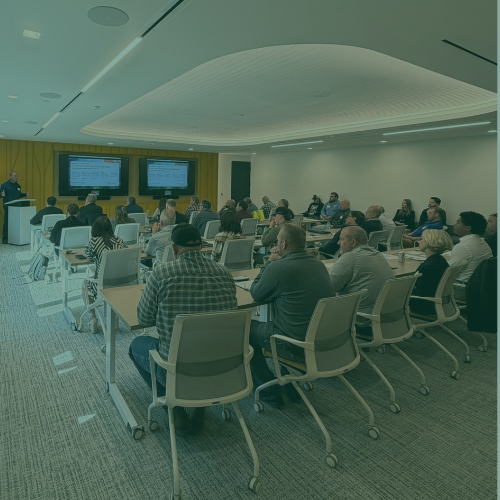
On November 10, Seubert hosted its Construction OSHA Roundtable at Seubert U in Pittsburgh, with contractors, safety leaders and owners joining both in person at Seubert U and online. The morning followed one thread: how you handle the first hour of an OSHA visit can shape the citations, the settlement and even your prequalification scores months later.
The panel brought the perspective of a consultant, a former regulator, an OSHA attorney and a contractor safety leader:
- Paul Mueller, President of Loss Prevention Services, Inc., who has guided contractors through inspections, informal conferences and fatality investigations
- Frank Librich, retired OSHA Assistant Director in Pittsburgh
- Tod Morrow, OSHA attorney with Morrow & Meyer LLC, with 38 years of experience handling inspections and Review Commission cases
- Jason Malatak, Chief Safety Officer at Mosites Construction, who closed the morning with a candid look at mental health in the construction industry
Missed the session or want to revisit it? Watch the full Construction OSHA Roundtable recording below.
Have a plan before OSHA arrives
Paul noted that very few companies train their crews on what to do when an inspector appears, and the result is often chaos. The fix can be simple: every employee knows who to call. Designate one person to manage OSHA activity, make sure a competent person is on every site, and decide in advance who brings in outside safety or legal help. Frank added that you can ask the inspector to wait for your designated contact to arrive, and that it is reasonable to ask what prompted the visit and request a copy of any complaint.
Be respectful, but don’t do OSHA’s job for them
Every speaker agreed that being rude never helps. They were just as clear that being helpful can hurt. Measuring a parapet, climbing into a trench with a tape or demonstrating how an accident happened turns your foreman into the source of OSHA’s evidence. Answer only what is asked, say “I don’t know” instead of guessing, provide only the records requested, and never make admissions on the spot. Tod also suggested using the right to request a warrant as leverage to negotiate a narrower scope, and noted that a drawn-out inspection often leads to fewer and sloppier citations.
Know your role on a multi-employer site
Frank walked through the four roles OSHA looks for: creating, exposing, correcting and controlling employers. A contractor can be cited for a hazard even when none of its own employees were exposed. General contractors face a delicate balance, since stepping in to direct a sub’s employees can pull you into controlling-employer territory. The panel’s advice was to stop the hazardous activity, then have the sub’s own management direct the correction. They also stressed that reasonable care is a documented effort, so keep a written log of site visits and conversations with subs, even the ones that seem trivial.
Citations are negotiable, so treat them that way
Tod explained that most OSHA cases settle, and that the 15 working day deadline to contest or request an informal conference is firm. Go to the informal conference to learn OSHA’s case, let them do the talking and build a baseline for settlement. He recommended contesting every citation and giving serious thought to filing a notice of appeal, particularly after a serious accident. Doing so can improve settlement terms, give access to OSHA’s inspection file and help you shape how citations read if civil litigation follows. With ISNetworld and similar scoring platforms in the picture, moving a serious citation to other-than-serious can matter as much as the penalty.
Prepare for employee and management interviews
Non-management employees are interviewed privately, and the panel shared stories of how one off-topic answer can add citations. Prepare crews by reviewing the training they have received, remind them that OSHA inspectors are not law enforcement, and avoid pressing them on what to say, since OSHA’s anti-retaliation provisions apply. If asked to sign a statement, employees can request a typed copy to review at home. Management can have counsel present and should not sign statements. After a fatality, Paul recommended a cooling-off period before interviews, since people are rarely at their best right after a tragedy.
If it isn’t documented, it doesn’t exist
The unpreventable employee misconduct defense is hard to win, and it depends on proof of a written safety rule, communication of that rule, efforts to find violations and discipline when violations occur. Keep training rosters, sign-in sheets and agendas, and document verbal warnings with a quick email to your safety manager.
Safety starts with the person behind the hard hat
Jason shifted the room from compliance to the human side of safety. Construction has invested heavily in physical protection, yet fatalities continue, and he shared that suicide takes more lives in the industry than on-the-job accidents. He urged employers to start with leadership buy-in, break the stigma by asking directly and caring consistently, and make sure employees know about resources such as their EAP, Mental Health America, the Construction Industry Alliance for Suicide Prevention and the 988 Suicide & Crisis Lifeline. His team’s approach includes mentoring programs, wellness training and measuring success by how often employees call the safety department. As Paul noted, the room was silent for the entire talk.
Whether you are building an inspection response plan, reviewing your multi-employer contract language or rethinking how your insurance program responds to a citation or serious loss, Seubert’s Construction team can help you find the gaps before OSHA does.
If you’d like to take a closer look at the strategies Seubert could implement to help your business Minimize Risk. Maximize Potential. Get in touch today!
- |
- |
- |