

Publish Date: January 26, 2026
Author: Seubert
Tags: Blog - SeubertU
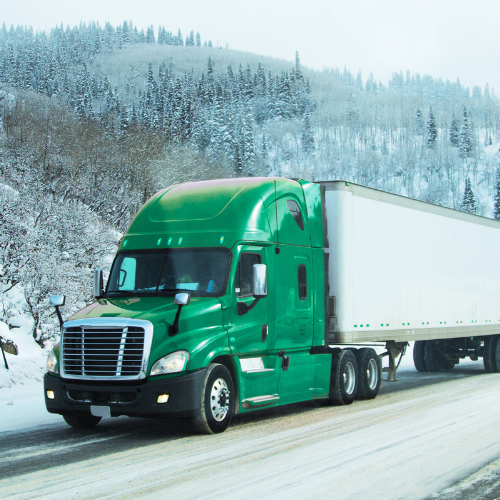
Slips, trips, and falls are among the most common injuries in the trucking industry, and winter weather makes them even more likely. Ice, snow, slush, and mud can quickly turn truck steps, loading areas, and parking lots into hazards. A single misstep can result in sprains, strains, fractures, or even head injuries, leading to lost time, costly claims, and prolonged recovery periods.
Employers can mitigate these risks by reinforcing winter-specific practices and ensuring drivers have the necessary resources and training to navigate slippery conditions safely.
Walking Carefully and Staying Alert
Employers should remind drivers to slow down and stay alert when conditions are wet or icy. Training should emphasize taking short, deliberate steps, pointing feet slightly outward for stability, and staying on designated walkways rather than cutting across snowbanks or untreated areas.
Policies should require drivers to apply sand or salt before crossing icy patches and to use handrails whenever available. Employers should ensure that drivers have access to nonslip, insulated footwear with adequate tread and reinforce the importance of cleaning mud, ice, and grease off the soles before entering the cab to prevent interior slip hazards.
Using Three Points of Contact
Winter injuries often occur during cab entry and exit, making three-point contact a critical control measure. Employers should mandate that drivers always face the truck and maintain two hands and one foot—or two feet and one hand—on manufacturer-designed steps and handholds.
Supervisors should remind drivers never to jump from the cab or trailer. Even short drops can create severe impact forces on the joints and increase the risk of long-term injury. Drivers should instead climb down slowly, using designated traction points and ensuring the vehicle is fully stopped before dismounting.
Checking Ground Conditions
Before leaving the cab, employers should instruct drivers to visually assess the ground for ice, uneven surfaces, or hidden obstacles such as debris or hoses.
Employers can reduce risk by training drivers to keep their hands free by placing tools or materials on the floor before exiting and discouraging loose clothing or outerwear that may catch on handholds.
Regular maintenance protocols should include clearing ice, snow, and grease from steps, running boards, and treads to ensure a clean, slip-resistant surface.
Making Safety a Habit
Preventing winter slips, trips, and falls is a shared responsibility. By maintaining three-point contact, choosing proper footwear, keeping equipment clean and moving carefully in slippery conditions, drivers can protect themselves from injury. A moment of caution at every stop helps ensure everyone makes it home safely this winter.
Contact us to see how you could minimize risk:
- Transportation|
Recent News
Zero-day Vulnerabilities Explained
A zero-day vulnerability may go undetected or otherwise unresolved for an extended period, quietly existing within an organization’s broader IT infrastructure without affecting typical operations.
Employee Spotlight: Dylan Ward
Please help us welcome Dylan Ward to the Seubert Team as a Surety Operations Specialist in our Surety Bond Division!
Managing Project Delays and Stoppages
Proactive planning can help employers limit financial losses and keep a project protected from start to finish.
Seubert Named #2 Best Place to Work in 2026
For the second year in a row, Seubert ranks #2 on the Pittsburgh Business Times’ Best Places to Work list in the XL Employer category.
Employee Spotlight: Valerie Vernik
Please join us in welcoming Valerie Vernik to our Employee Benefits Department as a Benefits Account Manager in our Pittsburgh Office!
How Commercial Insurance Applications Affect Your Coverage
When businesses purchase commercial insurance, they often focus on limits, deductibles and policy terms. Yet the insurance application is equally important. It is a legal document insurers use to evaluate risk, determine eligibility and establish coverage terms and pricing.