

Publish Date: April 8, 2024
Author: Tori Evans
Tags: Blog - SeubertU
By Tori Evans, CIC | Seubert Sales Consultant
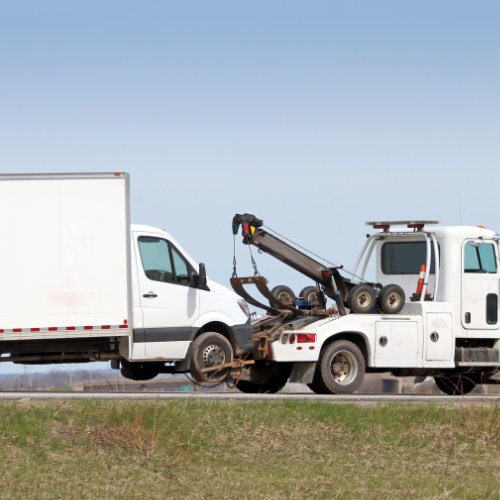
“Predatory towing” is a term becoming far too common in the trucking industry. According to the American Transportation Research Institute (ATRI), 83% of carriers reported being invoiced for excess tow rates on a broken-down semi truck.
As it stands today, there is little regulation from state to state. The lack of regulation means charges can increase drastically with unexplainable administration fees and surcharges tied to weather conditions, time of day, and location. Trucking companies are stuck paying these high invoices to get the release of their equipment. An excessive tow bill can impact a trucking company in many ways. If a truck is involved in an accident, these charges can drive up the total cost of a claim and some companies are left to pay the tow bill out of pocket if insurance does not cover it. The last thing a trucker should have to worry about in the event of an accident or mechanical failure is excessive fees from a tow company.
While there is no full proof way to eliminate the possibility of being affected by “predatory towing” there are some things you can do to protect yourself. Below are a few ways to mitigate your risk.
- Get with your insurance carrier. Most insurance companies partner with tow companies nationally to reduce the chance of price gauging. If you need a tow truck at the scene, contact your insurance partner as soon as possible to alert them of the services needed to see if they can send out one of their trusted partners.
- Call the company yourself and ask if they have a published rate sheet and compare it against your invoice.
- Train drivers to ask the police to call a local tow company they trust.
- If you’re a regional or local carrier, find a local company to partner with when you need a tow & make sure your drivers inform law enforcement to only call this company. This could give you the ability to negotiate rates ahead of time and build a relationship, so you don’t get price gauged.
- Give drivers enhanced training on what to document & take pictures of at the scene. This includes things such as the tow company truck & name, number of personnel on scene & equipment being used. These pictures can be used to push back on unwarranted fees or falsification of equipment used on scene.
- Coach drivers to not sign any documents at the scene. Towing and Recovery companies may request drivers sign documents at scene which outlines assignment of rights and agreement to increased rates and surcharges.
- Let your insurance carrier negotiate with the Tow and Recovery companies or hire a lawyer who specializes in this area to draft a demand letter.
 Tori Evans is a Sales Consultant in Seubert’s Commercial Line Transportation Division. She joined the agency in July of 2020 and has more than 10 years of industry experience. In her current role, Tori is identifying strategic threats and opportunities, coordinating resources, and advising on risk management solutions that align with your business’s unique goals.
Contact Tori to see how you could minimize risk
412.223.1447 | [email protected] | LinkedIn
- Transportation|
Recent News
Seubert Webinar Recap: Pharmacy Benefits Beyond the Rebate
Missed our pharmacy benefits webinar? Get the key takeaways on rebates, biosimilars, GLP-1 coverage, specialty drugs and PBM transparency, plus the recording.
Employee Spotlight: Gianna Mancino
Please join us in welcoming Gianna Mancino to the Seubert Team!
Zero-day Vulnerabilities Explained
A zero-day vulnerability may go undetected or otherwise unresolved for an extended period, quietly existing within an organization’s broader IT infrastructure without affecting typical operations.
Employee Spotlight: Dylan Ward
Please help us welcome Dylan Ward to the Seubert Team as a Surety Operations Specialist in our Surety Bond Division!
Managing Project Delays and Stoppages
Proactive planning can help employers limit financial losses and keep a project protected from start to finish.
Seubert Named #2 Best Place to Work in 2026
For the second year in a row, Seubert ranks #2 on the Pittsburgh Business Times’ Best Places to Work list in the XL Employer category.